




















Pranay Ingale - AI Platform Architect
Specialization: AI Platform Architect
Distributed & Fail-Safe Systems
Founder Director
SIAIZ Pvt Ltd
Based in: Bangalore, India

AI Platform Architecture

I'm Pranay Ingale
AI Platform Architect

AI Platform
Architecture

Retrieval-augmented and grounded AI features Model serving, evaluation and cost governance Low-latency streaming responses at scale Taking AI from prototype to dependable production
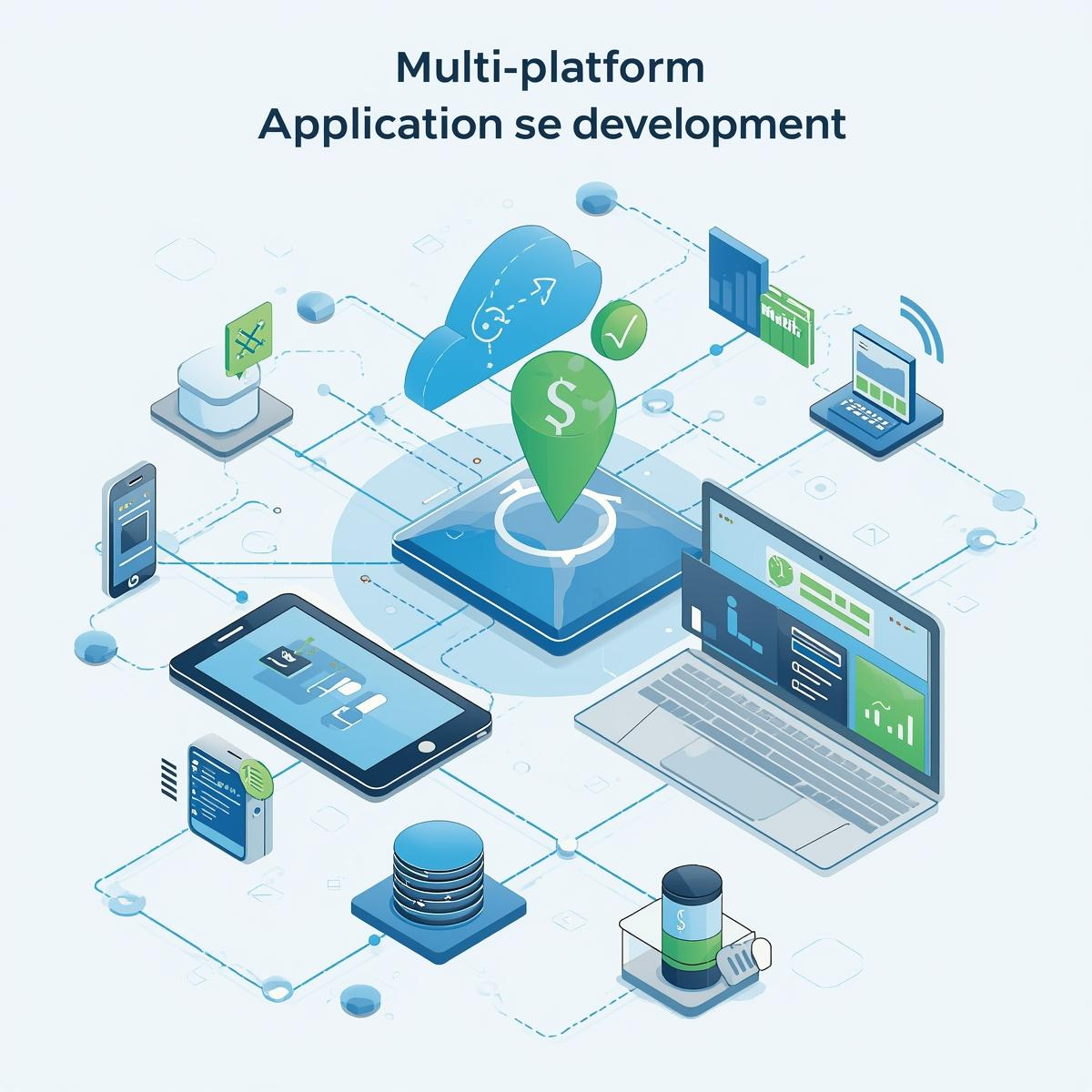
Multi-platform development

Resilient
Distributed Systems

Microservice decomposition & service boundaries Event-driven architecture & asynchronous messaging Graceful degradation under partial failure High availability, disaster recovery & capacity planning
AI, machine learning and data science

Secure by Design
& Compliance-Ready

Zero-trust and defence-in-depth design Identity, access management & single sign-on Threat modelling & secure architecture review GDPR, SOC 2, ISO 27001, HIPAA & PCI-DSS readiness
Software architecture and microservices

Platform Engineering
& Delivery

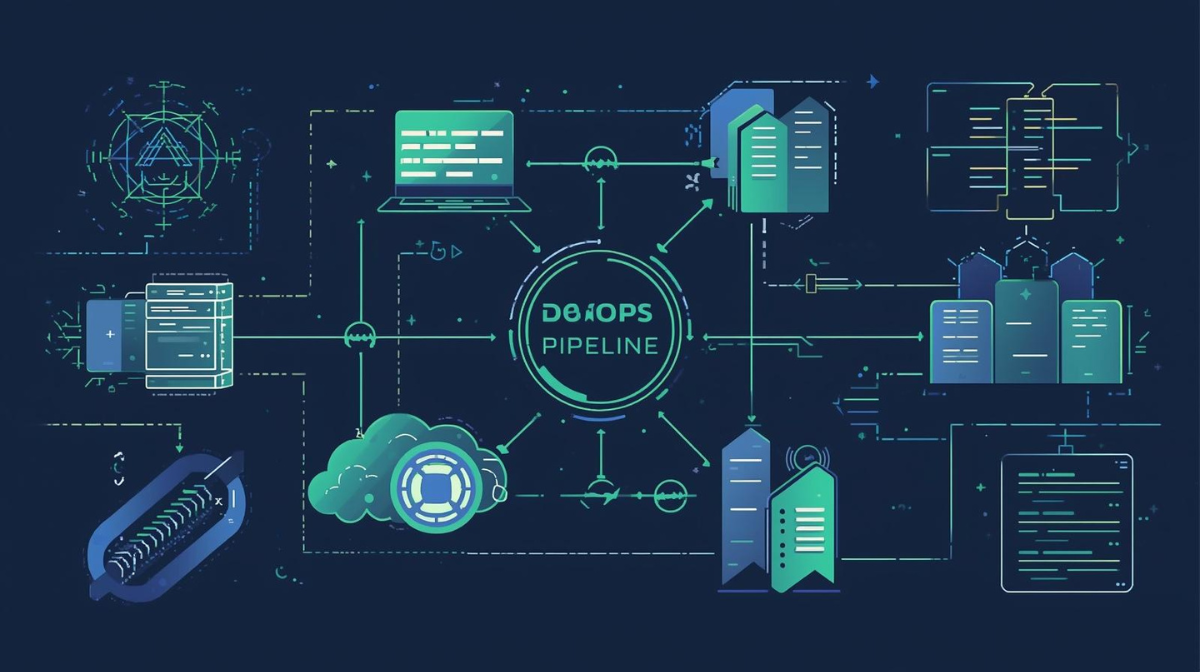
Golden-path templates & developer experience Kubernetes platform design & GitOps delivery Progressive delivery with automated rollback Observability, SLOs & error budgets
Cloud and infrastructure

Portfolio

Architecture work worth reading

About Me

I design the platform that AI actually runs on

40+

Clients & partners

5+

Years building production systems

50+

Projects delivered

I'm an AI platform architect and the Founder Director of SIAIZ. A model in a notebook is not a product. What turns it into one is the platform underneath — the identity, reliability, streaming and governance layers that decide whether an AI feature holds up on a bad day with real users on it. That layer is what I design.

My work is governed by one rule applied everywhere: no single component is trusted on its own. I treat security and resilience as the same discipline rather than separate reviews, design for the day a dependency is unavailable rather than the day it works, and consider a recovery plan nobody has rehearsed to be a defect with an owner.

I came to this from the other direction — mechatronics and robotics, then CubeSat and defence systems at Tech Mahindra, then firm-wide enterprise software at Infosys. Systems that fail physically teach you things about failure that pure software work does not. Let's talk if you are putting AI somewhere it has to hold up.

Name Pranay Ingale

How I architect

01
Contain the blast radius

The point of a service boundary is that trouble stops at it. Get the boundaries right and an incident degrades one capability; get them wrong and every dependency becomes a way for one failure to spread.

02
Decide the failure posture

What a system does when a dependency is unavailable should be a deliberate decision made in advance, not whatever the code happens to do at 3am. Undefined behaviour under failure is where most incidents actually live.

03
Trust no single control

Defence in depth means no one control is load-bearing. Every boundary enforces independently, so a single misconfiguration is never sufficient on its own — and security is treated as the same discipline as resilience, not a separate review at the end.

04
Stay correct under retry

Retries are what make a system available, and also what quietly corrupt it. Designing so that a repeated request cannot double-charge, double-send or lose a record is unglamorous work that decides whether the data can be trusted later.

05
Prove it, don't claim it

Resilience that has never been exercised is a belief, not a property. I would rather find the limit in a rehearsal than during an incident — untested recovery code should be assumed broken until something proves otherwise.

06
Write down the limits

Every design I ship names its current gaps and honest limits alongside its strengths. An architecture document that only lists what works is marketing, and teams stop trusting it the first time reality disagrees.

07
Know what not to build yet

Half of architecture is deciding what to leave alone. I keep an explicit not-yet list with the condition that would justify each item, so deferral is a dated decision rather than an oversight — and so complexity arrives when it is earned.

Resume

The path to architecture

Mechanical engineering, then robotics and satellites, then firm-wide enterprise software, now platform architecture. Each step added a different way for a system to fail — which is, in the end, what architecture is the study of.

Work experience

2025 - Current
Founder Director & Principal Architect

at SIAIZ Pvt Ltd

Own the platform architecture end to end — the shared identity, event, notification, media and audit tier, the zero-trust security model, and the GitOps delivery chain that every application is built on.

2021 - 2024
Senior Engineer

at Infosys

Built and maintained firm-wide enterprise applications, modernising legacy services and optimising performance-critical code paths.

2020 - 2021
Student Trainee

at Tech Mahindra

Contributed to CubeSat and defence robotics programmes, working on embedded control systems and onboard sensor integration.

My education

2021 - 2023

Core Java, Spring Boot, ReactJS, HTML, CSS, MongoDB

2018 - 2021

Research, design, and prototype effective, Robotics Design & Automation.

2018
Polytechnic

Course by MSBTE - Mechanical Engineering

Designed & Implemented Automatic vehicle uplifting System

Where my depth is

Fourteen disciplines across three layers. I work against a real cluster rather than a course, break it deliberately on a schedule, and close a topic on a demonstration rather than a feeling — if I cannot perform it without looking it up, I do not yet know it. The middle layer is where the least-teachable work lives.

The substrate

What the platform runs on. Table stakes rather than the differentiator — but nearly every hard failure resolves down to this layer, which is why the people who are fast in an incident never left it.

00
Linux, networking and TLS

The layer everything else is a process on

Processes and sockets, name resolution traced end to end, and what a certificate chain actually proves and to whom. The debugging floor beneath every abstraction above it.

01
Infrastructure as code

Convergence as a recovery plan

Declarative provisioning and configuration, with idempotency understood as a property rather than a slogan — it is what makes “re-run until it converges” a disaster-recovery procedure instead of a hope.

02
Containers and isolation

Mechanism before opinion

Namespaces, control groups and capabilities as three separate mechanisms, and the ability to explain mechanically — not by citing policy — why certain privileges hand an attacker the host.

03
Orchestration and the control loop

The object model, not the chart

The declarative object model and the reconciliation loop that services it. Charts generate manifests; the control loop is the thing actually debugged at three in the morning.

04
Cluster networking and the edge

The boundary with the internet

In-cluster policy enforcement, ingress routing, certificate lifecycle and request filtering at the perimeter — with a dropped packet proven by observation rather than inferred from a timeout.

The shared backbone

What makes this a platform rather than several applications sharing a bill. This is the genuinely hard part, it is specific to the architecture rather than to any technology, and almost none of it exists as a course.

05
Federated identity and single sign-on

One account across every product

Silent re-authentication, one stable subject identifier across every application, and ecosystem-wide logout as a kill switch — resting on the distinction people most often collapse: who you are is not the same question as what your details are.

06
Multi-application data isolation

The most load-bearing decision in the data layer

Deciding which data may legitimately differ per application and which is global by design, enforcing that at the datastore rather than in application code, and making the failure mode “no rows returned” rather than “every application’s rows”.

07
Consent, lawful basis and erasure

What makes a shared account lawful

Which permissions a person may freely withdraw and which they may not, disclosure negotiated per application rather than assumed, and erasure satisfied without destroying referential integrity or the compliance record.

08
One service, many applications

The onboarding test, applied continuously

Finding what is genuinely identical across every application and making only that part code; everything else becomes data. Per-application behaviour belongs in configuration, never in a branch inside a service every product depends on.

09
Events, delivery and real-time fan-out

One thing arrives, many must receive it

Guaranteeing that a state change and its notification cannot disagree, then designing the live path for latency and the catch-up path for correctness — and never asking one path to do both jobs.

10
Contracts and API governance

Independence as a verified property

Schema evolution, automated breaking-change detection and consumer-driven contract testing. With many products on one backbone, an unreviewed interface change is not an inconvenience — it is an outage in a product that never knew a change was happening.

Running it

Operating something many products depend on at once. The stakes change the moment an outage stops being one team’s problem and becomes everyone’s.

11
Observability across applications

Healthy for whom?

Instrumenting so health can be answered per application rather than per platform — because a shared service can be entirely fine for three products and broken for the fourth, and a single aggregate number hides exactly that.

12
Delivery and the supply chain

The pipeline writes, the cluster reads

Build once and promote by immutable digest, artefact provenance verified before anything runs, and progressive delivery that withdraws a bad release on its own — with build systems that hold no production credentials at all.

13
Resilience, operations and recovery

What separates building from running

Deliberate, documented behaviour when a dependency is unavailable; incident response, severity and blameless review as practised routines; and recovery targets measured by a real restore into a scratch host rather than asserted in a plan.

The single question I hold every shared-platform decision against: can a new application be onboarded without modifying or redeploying any shared service? If not, something variable was modelled as code when it should have been data.

The stack I architect on

Java
Java
Spring Boot
Spring Boot
Python
Python
Kubernetes
Kubernetes
Docker
Docker
Terraform
Terraform
Kafka
Kafka
RabbitMQ
RabbitMQ
PostgreSQL
PostgreSQL
Redis
Redis
Elasticsearch
Elasticsearch
Prometheus
Prometheus
Grafana
Grafana
OTel
OTel

Testimonials

What teams say

Review Author

Client Name

CTO at Company Name

We brought Pranay in to review an AI feature we thought was ready. He found that our inference calls had no timeout, no budget and no fallback — one slow provider would have taken the whole product down. The design he replaced it with has absorbed two provider outages since, and our users noticed neither.

Review Author

Client Name

Head of Product at Company Name

He writes the clearest architecture documents I have read — every decision carries its reasoning and, unusually, its honest limits and current gaps. Our engineers stopped asking "why is it built this way?" because the answer was already written down. That alone changed how fast we could onboard.

Writing

Notes from building the thing

I write to find out whether I actually understand something. Most of these started as an argument with myself in a design document, or as the note I wished someone had left before I spent a fortnight learning it the expensive way. They are about the decisions rather than the tools — tools change, and the decisions turn out to be the part that transfers.

Identity 28 Aug 2026 · 9 min read

Shared identity is not shared data

The distinction that keeps one account across many products lawful rather than merely convenient.

Two questions get collapsed into one constantly, and the collapse is expensive in both directions. Single sign-on answers who are you. A profile answers what are your details. Conflate them and you either duplicate a person’s profile once per product, or you quietly leak a phone number into an application the user never gave it to. The fix is not technical so much as definitional.

Read the piece
Platform design 14 Aug 2026 · 12 min read

The fifth application test

How to tell whether you built a platform or four applications wearing a trench coat.

There is exactly one question worth asking of a shared backbone: can a new application be onboarded without modifying or redeploying any shared service? Everything else is commentary. When the answer is no, the cause is almost always the same — something that varies between applications was modelled as code or schema when it should have been data. Four specific mistakes account for most of it.

Read the piece
Real-time 31 Jul 2026 · 11 min read

Design the live path for latency, the catch-up path for correctness

Why the fastest way to make real-time delivery reliable is to let it drop messages.

Fan-out looks like a hard delivery-guarantee problem until you notice the message is already committed with a monotonic sequence. That single fact collapses the complexity: the live hop is allowed to be lossy, because a client that misses one sees a gap and fetches it. The mistake is building one path that tries to be both fast and correct, and succeeds at neither.

Read the piece
Data modelling 17 Jul 2026 · 10 min read

When a discriminator on every table is the wrong answer

Carrying SaaS instincts into a single-organisation platform quietly reproduces the tenant mistake one level down.

The instinct is to stamp an identifier on every row and move on. But the question that actually assigns a table is narrower and more useful: could a row here ever belong to a different application than the row next to it? Apply it honestly and three categories fall out — and one of them must stay global, or you have just re-invented asking people to type their name into every product.

Read the piece
Method 03 Jul 2026 · 7 min read

Demonstrate, do not assume

On finishing things you study with a demonstration rather than a feeling.

The most common way to lose a year is to finish the substrate and mistake that for understanding the platform. The correction that worked for me is cheap: every topic ends in something I have to perform — debug this failure without searching, prove that packet was dropped, restore that backup and record the measured time. If I cannot do it cold, the topic is unfinished. That is information, not failure.

Read the piece
Judgement 19 Jun 2026 · 8 min read

Knowing what not to build yet

An unbounded roadmap is the same as no roadmap. The useful artefact is the not-yet list.

Workflow orchestration, semantic search, a developer portal, multi-cluster federation — each is genuinely worth having, and each is worth nothing today. What makes deferral a decision rather than an oversight is writing down the condition that would justify it: before the first transaction spans services, once there is a corpus worth searching, when a second team generates services. Then revisit on the condition, not on the mood.

Read the piece

More of these arrive when something breaks in an interesting way. Tell me what you are building and I will happily argue about it before it is expensive to change.

Contact

Building something that has to hold up?

Done!

Thanks for your message. I'll get back as soon as possible.

Putting AI into production, designing a platform several applications will share, or want an architecture review before it is expensive to change? Drop me a line and I'll get back to you as soon as possible.